HOPE and EARWORMS


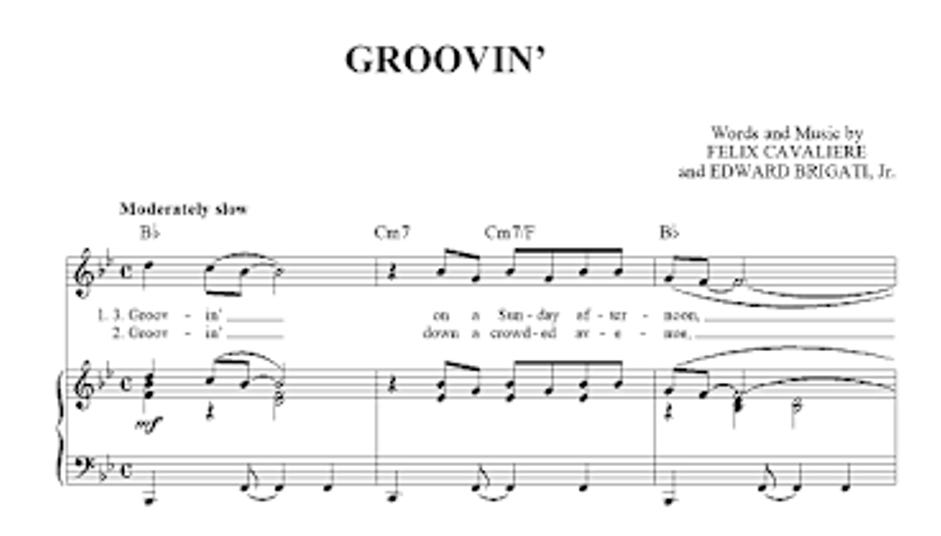
I awoke the other morning with Groovin’ By the Young Rascals playing in my head, a song that defined a pivotal moment in 1967, just before the cultural shift and the musical revolution of that era.
Groovin’ is as simple as the joy of driving – top down, sitting next to the boy or girl of one’s dreams. It was written for Sundays that offered time to relax, get out of the house, and cruise. For me, the song evoked the pastime of Southern California’s Low-Riders; a magnificent sight to behold for the young who were taking in all the signs that pointed to minority pride, with the cool, jazzy, bluesy piano chords ready-made for a young listener, hopeful and new to the piano, “Hey, I can do that.”
And many did. That I’m writing about our music twenty-six years into the 21st Century conveys the power and hope of a song, simplistic lyrics. Yet, I was fourteen, a dreamer since birth, and this song spoke to my dreams of hope and the adult freedoms that awaited me – a goofy girl from Compton with ideas she didn’t believe could be spoken out loud. It was the music that did that. The chorus lifts me up in a simple ah ha ha – taking me along on a river of dreams. Life was going to be great for me. I knew it. Here is where I put on the scratched-up 45 on my little record player and waltz around my bedroom, dreaming of sitting in a car next to someone who would fulfill all my dreams of love and happiness.
I find it hard to conflate, as some sources do, Groovin’ with the early counterculture, that tune-in-drop-out ethos of those with options who marched and yelled anti-war sentiments, burned bras and draft cards, leaving a seventeen-year-old me to question what the hell was going on in the enclaves of the White middle class.
The counterculture movement seemed a world away from the barrios of East and South Central Los Angeles. All we had were Sundays – and Sundays were for Goovin’.
1968 – that wild summer of love, when trying to find my way back to a picnic, I mistakenly walked into a Love-In happening in Griffith Park. It should have been an instant eye-opener for me – maybe it was, but when a white bare-chested reveler grabbed my hand to pull me into the circle of tamborine and flute playing revelers, I pulled back, frightened and amazed at once. This was the counterculture – one aspect of it, anyway: people free enough to paint their faces, grow their hair into wild acts of defiance, and dance to loud, hard music, letting bodies determine their own movement. It was a freedom that ran counter to the button-down, pocket-protector attitudes expected of every American worker and of those hoping to enter that rarified class.
I couldn’t be carefree and Groovin’ every day of the week. I was part of a hopelessly redlined collective that depended on the kindness of Congress to read between the lines of frustration and hopelessness. Messages that came through loud and clear with the riots and assassinations of the late sixties, telling me there was no time for Groovin’. I had to go to college – any college - and I did. Still, I didn’t know at the time (how could I?) that I was part of the largest contingent of African Americans to attend college, thereby moving the largest group of blacks into the American middle class. We did that.
After graduation, all those Young Rascals’ lyrics about living in endless ecstasy proved false, especially in the scramble for stuff, homes, children, and jobs that demanded attention even on Sundays, leaving little time for groovin’.
I think of the proliferation of ‘80s & ‘90s radio stations with only oldies playlists. Vintage music that was supposed to soothe the rocking-chair generation, making us forget our arthritic knees and failing eyesight as we remember Sundays and Grovin’.
But now we are being called up from our Groovin’ dreams and thrust into action, drawing our new protest posters with shaky hands in preparation for what may be our last march against the unspeakable behavior of this person in charge. Some of us, I know I am, are chagrined today remembering how we thought Richard Nixon was the worst leader of the U.S. And now, a much more base human forces us to march again. We all do it proudly because the color of camaraderie is the same as the color of hope. The same hope and nostalgia that were produced in the easy piano chords and the tambourine, with harmonica holding time in the background, softly pounding home the idea that “Grovin’” is still possible, even among today’s evil.
I listen to Grovin’ now, and I ache, hoping I live long enough to see a time where things are better and we can experience a world where we can all be endlessly Groovin’ ♾️ ☮️